of breaches in 2025 involved a third party, double the year prior
average healthcare breach cost, the costliest sector for the 14th year
to identify and contain a supply chain breach, the longest of any vector
individuals affected by U.S. healthcare breaches reported in 2025
Every EHR add on, every revenue cycle integration, every clinical workflow tool runs code your team didn't write. SOC 2, HITRUST, and ISO 27001 capture a single moment in time. Risk doesn't wait for the next audit cycle, and the breaches keep happening to organizations that hold all three.
Annual security questionnaires capture vendor self attestation at a single moment, then drift for twelve months. New CVEs disclosed the day after the response go untracked until renewal. By the time the next questionnaire arrives, the breach has already happened.
48,185
A signed BAA tells you a vendor agreed to handle PHI responsibly. It tells you nothing about the open source dependencies, offshore contributors, or unpatched vulnerabilities sitting inside the software those agreements actually run on.
1,251
OCR, SEC cyber disclosure rules, and your cyber insurance underwriter all want documented oversight of software supply chain risk. The audit committee wants the same answer in plain language. Most CISOs have nothing current to show them.
$4.91M
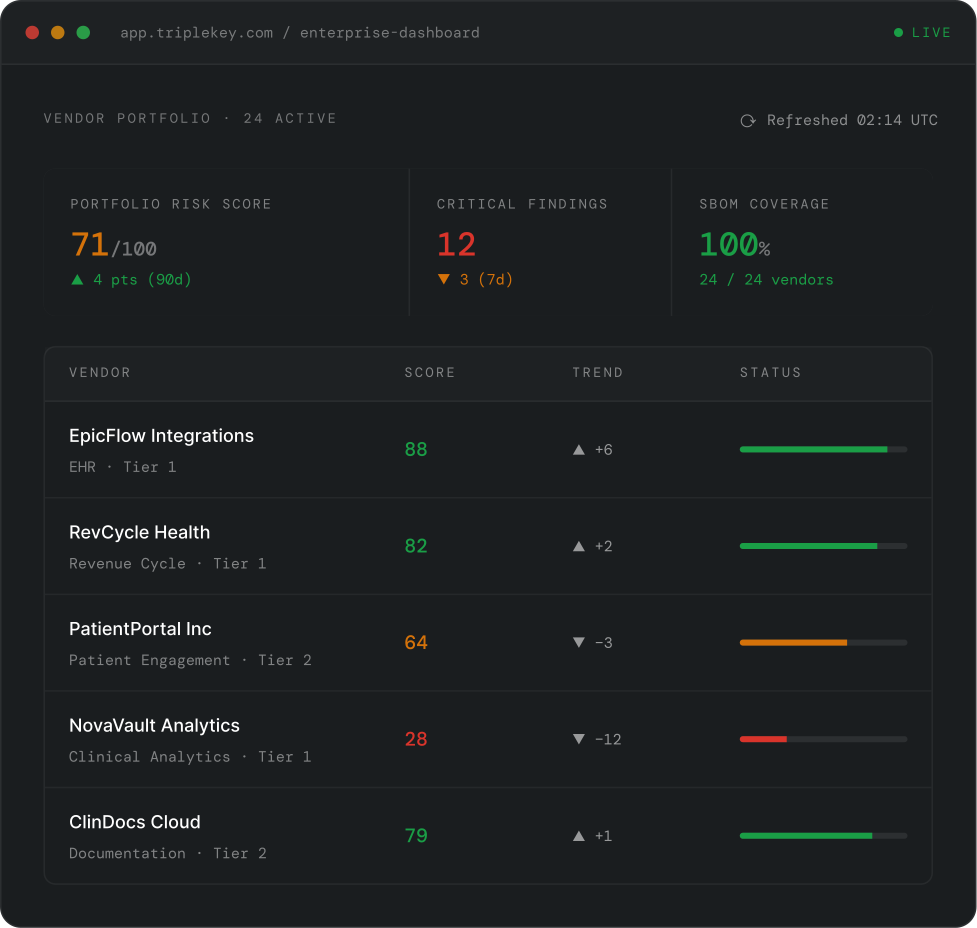
The TripleKey Enterprise Dashboard turns vendor risk into a number you can read, a trend you can track, and a story you can tell your board. Every CVE across every vendor in your stack rolls up into a single Tech Risk Score per vendor, with a ninety day trend line and a clear story of which risks are rising and which have been mitigated.
Every vendor risk program lives or dies on one question: will your software vendors agree to be measured? For two decades, the answer has been no, or yes with a sixty page questionnaire that nobody trusts. The friction was always too high.
TripleKey solved that problem with an approach that puts nothing in front of your vendors. No tooling for them to install. No process for their teams to change. No risk to the systems they ship every day. Everything TripleKey analyzes is protected by our patented encryption (US 12,455,973 B1). Zero friction is the reason vendors say yes inside a single business day, and it is the reason your dashboard fills up while questionnaires sit unread.
TripleKey was designed to be a routine operational input for your CISO, your procurement team, and your audit committee. Not a heavy implementation. The first vendor is connected the same week you sign.
Start with your tier one clinical and operational software vendors. Most health systems begin with twenty to fifty named vendors. We help you scope.
Your vendors grant read only repository access. No cost to share their score. No agents. No CI changes. No engineering lift. Most onboard inside a single business day.
TripleScan inventories every dependency, flags every CVE and license conflict, and produces a Tech Risk Score per vendor, refreshed every twenty four hours.
One Portfolio Risk Score for the audit committee. One ranked queue across every vendor for your CISO. One quarterly view, generated automatically, sharable with the CFO, GC, and auditors.
The Enterprise Dashboard is built so your CISO, your procurement team, and your audit committee can all read the same vendor risk view, draw the same conclusion, and ask the same next question.
Stop chasing questionnaires that were stale the day they came back. Get a daily, ranked queue of vendor risk across the entire portfolio, with plain language explanations for every change.
Run quarterly business reviews with current data, not survey responses. Onboard new vendors with a baseline scan inside a single deal cycle. Renew with confidence, or with a clear remediation milestone.
Stop walking your board through general statements about cyber posture. Show them a single Portfolio Risk Score, a trend line over time, and a clear story of which risks are rising and which have been mitigated.
SOC 2, HITRUST, and ISO 27001 are necessary. They aren't sufficient. Most major healthcare breaches of the last three years happened to organizations that held current certifications.
CISO, Community Health Network
Indianapolis, IN · TripleKey customer since 2025
If you still have questions, feel free to send us an email to: help@triplkey.com
Yes, and at a higher rate than questionnaires. There is no cost for them to share their score, the integration is read only access, and most onboard the same business day. They get to replace a 40 page security questionnaire with a live dashboard link they can share with every customer who asks.
Self-attestation is exactly the assurance model the 2026 HIPAA Security Rule is moving the industry away from. Independent, continuous, code-level visibility is the new bar, and it is a bar the regulator, the cyber insurer, and increasingly the procurement function will hold hospitals to.
SOC 2 is a snapshot of a vendor's controls at a single moment, sampled by an auditor, refreshed annually. TripleKey is a continuous, independent, forensic level scan of the actual software that vendor ships, refreshed every twenty four hours. Both have a place. Only one keeps up with the threat.
Never. The out of pipeline architecture means TripleScan reads from a vendor's repository with read only access, and scan data is protected by TripleKey's patented encryption. We never sit inside their build process, their CI, or their runtime. Zero blast radius. Their engineers do nothing during onboarding and nothing afterward.
Date stamped, on demand evidence of vendor oversight. SBOM coverage across one hundred percent of monitored vendors in CycloneDX or SPDX format. A continuous, defensible record of remediation cadence that holds up to regulator inquiry, underwriter renewal questions, and audit committee scrutiny.
Most healthcare systems start with the vendors who have a low external scan result. Your TripleKey team scopes the cohort with you during onboarding.
Bring a list of your tier one software vendors and we'll walk through what the Enterprise Dashboard would surface across your portfolio. The board ready quarterly view your audit committee actually wants is closer than you think.