Software shouldn't be a black box.
average ARR stalled in security review at growth-stage SaaS
typical extension when SBOM evidence is missing from the deal
growth in supply chain breaches over two years, accelerating board scrutiny
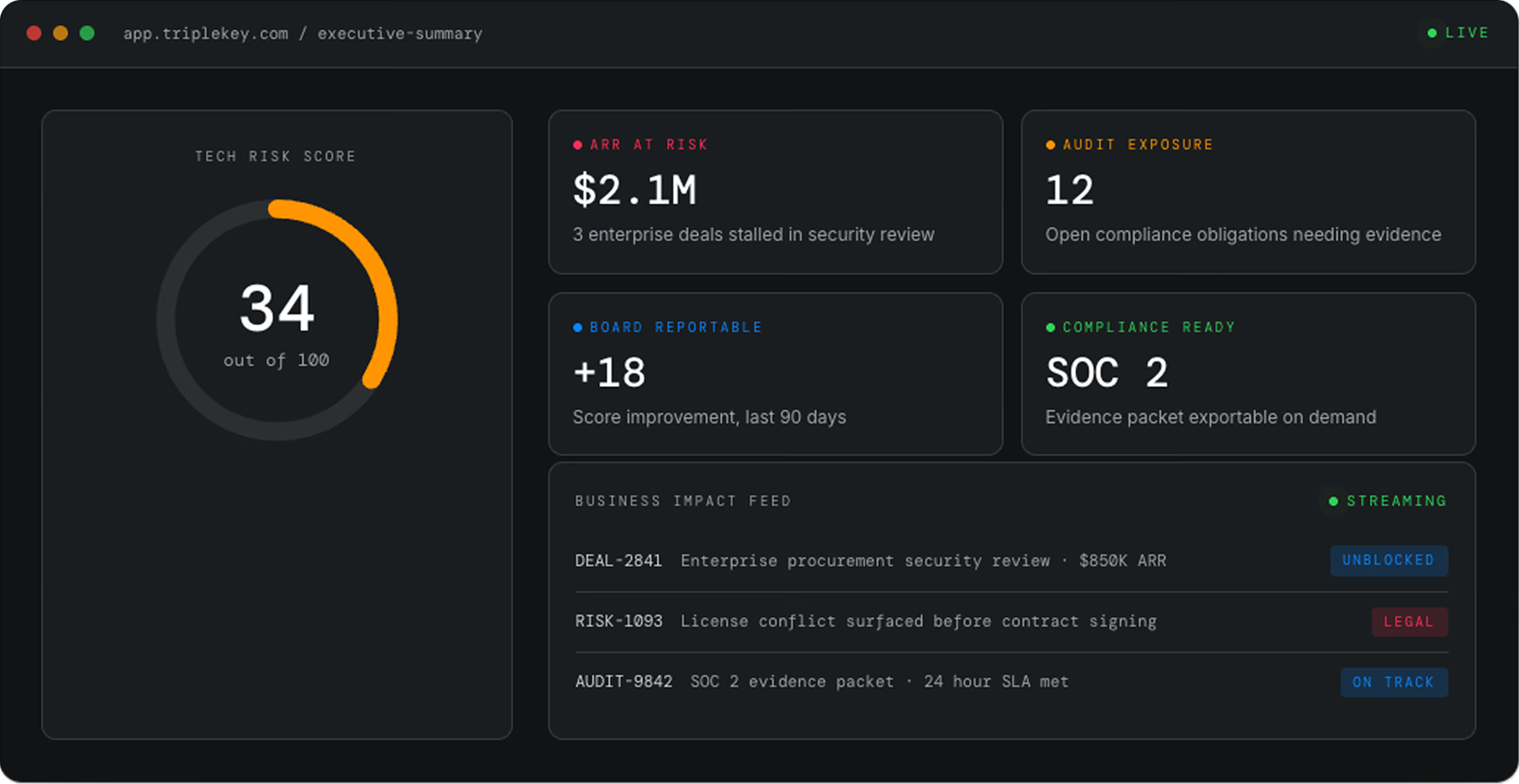
one weighted Tech Risk Score every team and stakeholder reads the same way
Three steps to your first score.
No purchase friction. No interrupted engineering teams. TripleScan starts producing answers your CFO and board can act on within the first week.

Live in hours with no engineering disruption
Your engineering team grants read-only access. We do everything else.

Technical complexity becomes one executive-ready score.
We translate forty thousand CVEs, license metadata, and contributor activity into a single number your board, buyer, and insurer all understand the same way.

Defensible answers, the moment a question lands.
Procurement asks for an SBOM. Your underwriter asks about supply chain. Your board asks about the latest breach. You answer the same day, with evidence.
Three risks. One scan. One score.
TripleScan looks at your software through three independent lenses, then synthesizes them into a single number your board, your buyer, and your underwriter can all read the same way.

Forensic Risk
The question your CISO and your insurer keep asking. Are there known vulnerabilities in your product, and are there credentials sitting in your code where they should not be?
- Daily scan against all disclosed risks
- Severity prioritization tied to exploit availability
- Exposed API keys, credentials, and secrets surfaced
- Insurer-ready evidence for cyber renewal questionnaires

IP & Licensing
The question your General Counsel, your acquirer, and your enterprise buyer keep asking. What open source is in your product, what licenses come with it, and can you produce that list on demand?
- Live SBOM exportable on demand for procurement
- Copyleft, GPL, and unknown licenses flagged before release
- M&A diligence-ready evidence, no fire drill required
- License conflicts caught before they reach a contract

Contributor Risk
The question that does not show up on most security tools. Who actually wrote the code in your product, and can you defend that answer when the board, your acquirer, or a customer audit asks?
- Visibility into offshore, contractor, and vendor commits
- Anomaly detection across active branches
- Defensible code provenance trail per repository
- Critical for regulated industries
- Monitor your outsourced or overseas partners
SOC 2 captured a moment. Continual is the new standard
Most high-visibility breaches happened to organizations holding SOC 2, ISO 27001, and PCI. Boards, buyers, and underwriters now know the difference between a certificate and a posture.
| Capability | Annual Certifications |
 TripleScan TripleScan
|
|---|---|---|
| Board Reporting | PDF, last refreshed 11 months ago | Live score, ninety-day trend |
| Sales Cycle Impact | Adds two to six months at security review | SBOM and warranty answers same day |
| Cyber Insurance Renewal | Self-attestation, growing premium pressure | Underwriter-ready supply chain evidence |
| M&A Diligence | Fire drill at term sheet | Forward a link, deal continues |
| Contract & Legal Exposure | Warranties signed without backing evidence | Defensible audit trail per dependency |

Cybercriminals are no longer breaking in through the front door, they're slipping in through trusted software vendors. Continuous, forensic-level visibility is the only architecture that stays ahead of that.
Scott McCullough
CEO, TripleKey
PR Newswire, October 2025

Real time visibility into software risk and compliance.
CVEs enriched by NIST in 2025, the largest single year on record
average Tech Risk Score on day one of a TripleScan engagement
new secrets leaked on public GitHub in 2025, a 34% jump year-over-year
daily SCA across direct and transitive dependencies, no engineering lift
Out of pipeline by design. No agents, no CI, no friction.
TripleScan operates entirely outside your build process. Patented SCA architecture means a read-only repo token is the entire integration footprint. Your engineers do nothing.
Read-only access. GitHub, GitLab, Bitbucket, Azure DevOps.
Connect in under five minutes. TripleScan never touches your CI runners, your build artifacts, or your production environment. No pull requests. No webhooks into your pipeline. No merge gating.
Daily SCA across direct and transitive dependencies.
Manifest parsing, lockfile analysis, license metadata extraction, contributor anomaly detection, and secret scanning. Every package, every commit, every twenty-four hours.

CycloneDX, SPDX.
SBOM exports on demand. Findings surface through dashboard. Role-based access control for security, engineering, and compliance teams.
Works with




Three independent signals. One unified score.
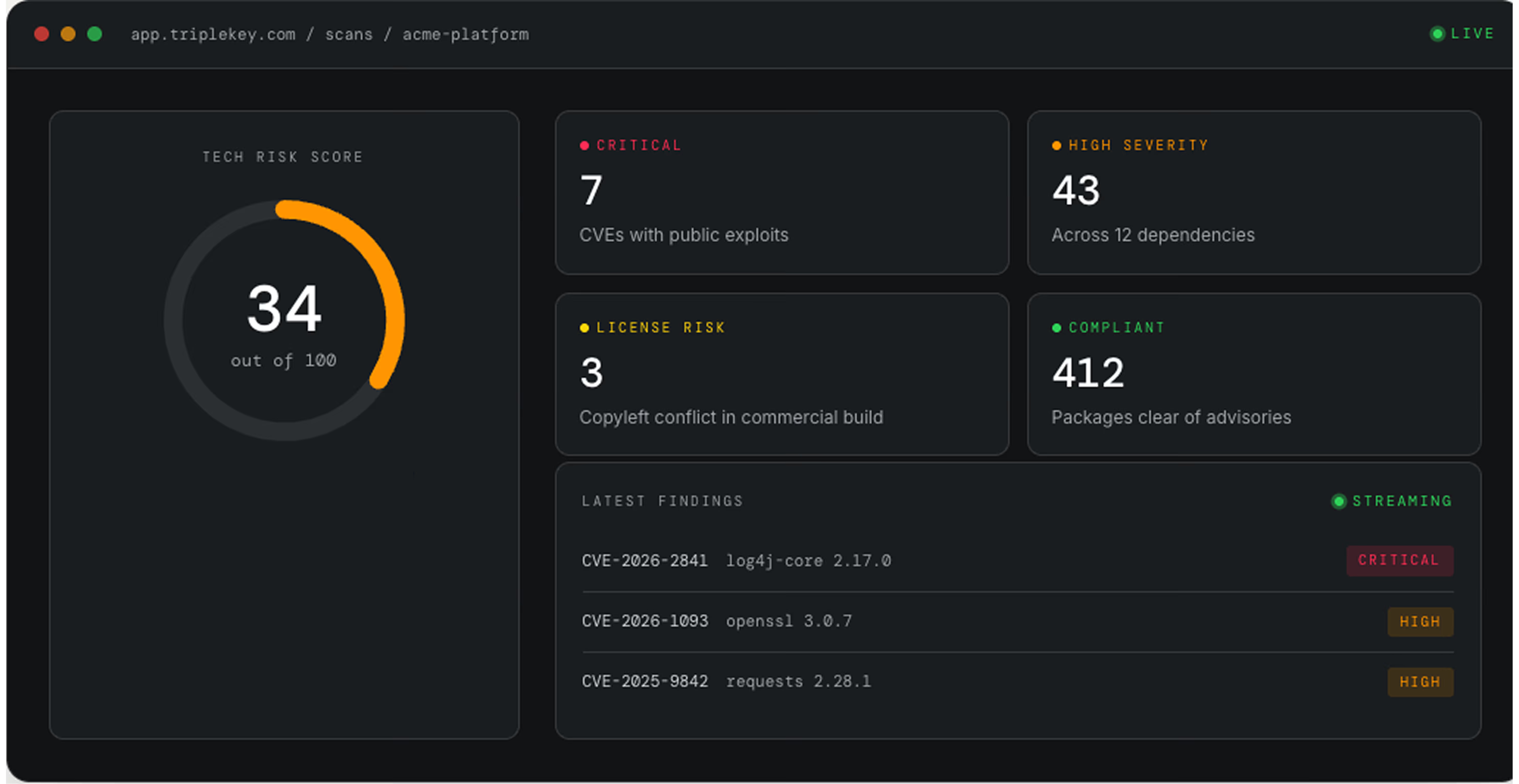
TripleScan runs three distinct analyses against your codebase every twenty-four hours. Each one answers a different question. Together, they produce the Tech Risk Score and the evidence trail underneath it.
Forensic Risk
Daily SCA across direct and transitive dependencies, matched against the global CVE database. Plus full secret scanning across history to catch credentials, tokens, and keys committed by accident.
- Match against 40K+ disclosed CVEs, refreshed daily
- CVSS v3.1 base + temporal scoring with exploit intelligence
- EPSS probability scoring for prioritization
- Secret scanning across full git history, not just HEAD
- Webhook alerts on new advisory matches in your graph
IP & Licensing
Manifest and lockfile parsing across every major ecosystem, with full transitive depth. SPDX license normalization and a policy engine for allowlist, blocklist, and conflict rules.
- npm, PyPI, Maven, RubyGems, Cargo, Go, NuGet, Composer
- CycloneDX and SPDX export ready
- Full transitive depth, not just direct dependencies
- GPL, AGPL, LGPL, custom and unknown license detection
- SPDX expression parsing including dual-licensed packages
Contributor Risk
Identity verification across every commit, every repo. Detect anomalous patterns, unverified email domains, and unauthorized contributors. Critical for offshore, contractor, and vendor-delivered code paths.
- Verified vs. unverified author signing analysis
- Commit pattern anomaly detection across active branches
- Email domain verification against expected contributors
- Cross-repo visibility into contractor-delivered code
- Defensible audit trail per repository, exportable on demand
SOC 2 captured a moment. TripleScan captures every day.
Most high-visibility breaches happened to organizations that held SOC 2, ISO 27001, and PCI. Risk does not wait for your next audit cycle.
| Capability | Traditional Audits |
TripleScan
|
|---|---|---|
| Cadence | Annual or quarterly | Daily, automated |
| Coverage | First-party code only | Code, dependencies, licenses, contributors |
| Time to Detect | Months | Within 24 hours of disclosure |
| Pipeline Impact | Engineering interrupted, manual evidence pulls | Read-only token, zero engineering lift |
| Vendor Visibility | Self-attestation, unverified | Continuous, third-party verified |
Maintaining patient trust means staying ahead of threats we couldn't previously see. By leveraging TripleKey we obtain that additional visibility and control.
Patrick McGill, MD
Chief Transformation Officer
Community Health Network